

Friday, July 15, 2011
Sunday, June 5, 2011

Tuesday, May 31, 2011
Friday, April 29, 2011
Thank our ancestors we are not starving.

Right now it is easy to see how dependent we are on modern technology to keep the world fed. Larger, productive farms replacing subsistence farming around the world. These practices for better or for worse keep mouths fed and bellies full.
But step back for a moment, just as the world couldn't have succeeded in growing the population to such enormous levels without improvements in farming methods, we wouldn't be here if it were not for our ancestors.
Many crops were domesticate through thousands of years of selective breeding and only exist today due to human intervention. Take the brassica family:
About 2000 years ago Brassica oleracea was first domesticated and grown in Mediterranean gardens. Growers kept seeds of the larger leafed plants and eventurally it became to what we know as kale today. Following the developement of kale growers selected ever and ever more tight bunches of leaves at the top of the plant that in turn led to the formation of heads of cabbage over successive generations of selection.
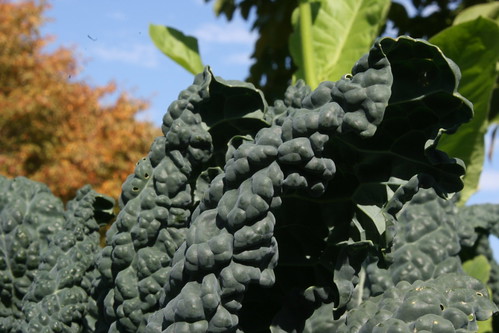

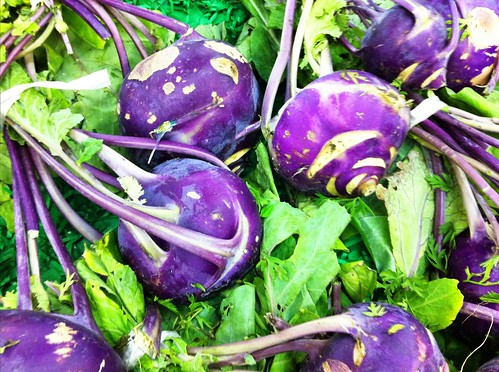
About the same time cabbage came into existance successive growing of large rooted kale plants led to kohlrabi.
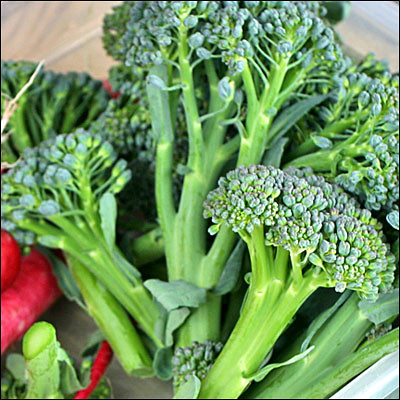
Later with a penchant for eating the flowering buds of the plant growers later developed cauliflower and broccoli.

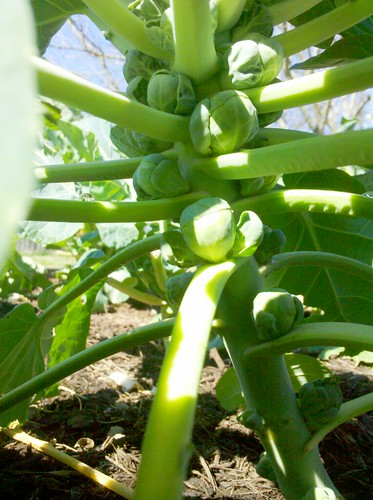
Still later after that in Belgium the selection smaller buds on cabbage led to the cultivation of brussel sprouts.
So between 2000 years ago and 300 years ago 6 distinct vegetables were painstakingly developed by our ancestors. This is but one plant that developed into several food crops, 2000 years in the making. The full girth of this worlds population weighed heavily on the shoulders of our ancestors, without them we would probably not have variety cultivars to grow in many parts of the world and we would not have the variety to as easily make a balanced diet.


Thursday, April 21, 2011
Talking to Strangers: honey birds
This is amazing that a wild bird becomes so tame and willing to help fetch honey. If I could only find an eagle that would help me fish.
Friday, March 4, 2011
Who Killed the honeybee.
Great piece by the BBC on the die off of honeybees worldwide. When trying to get to the bottom of what is going on I particularly like the analogy of going to the pharmacist and being asked what other medication you are taking to find out if there could be any negative interactions. I think this approach gets to the crux of colony collapse disorder. It is not one single thing in the environment but several working in congress and becoming toxic. Unfortunately this gives cover to the pesticide and GMO manufacturers since by themselves they are not directly toxic to honeybees.
Tuesday, March 1, 2011
Links on Food and Bees
Victoria farmer working to bring back buzz of native bees
Alarmed at honeybee colony losses that reached 80 to 100 per cent last spring on Vancouver Island, a Victoria farmer is abuzz over a program she says will boost native bee populations that could replace the threatened honeybee.
Working with the Victoria-based land trust, The Land Conservancy, as an agricultural program assistant, Nathalie Chambers is leading the just-launched Pollinator Enhancement Program. The provincewide plan aims to improve conditions for native bees so that farmers are not as dependent on the honeybee, the dominant pollinator, originating in the Mediterranean area and brought to B.C. in 1858.
US food prices could surpass 2008 levels, says USDA
US food prices could surpass those seen during the 2008 food price crisis this year, as higher commodity and energy prices cause food makers to pass on costs, according to the US Department of Agriculture (USDA).
The USDA predicted late last year that food prices would rise during 2011, and in recent weeks several major food manufacturers have said they intend to raise prices on the back of stronger commodity costs. The USDA had been saying since July that food price inflation – after dropping to its lowest rate in 18 years – would accelerate during 2011, by 2 to 3 percent. But it is only in the last week that the agency revised its forecast, saying that it predicts the Consumer Price Index (CPI) to rise by 3 to 4 percent during the year.
Bumblebees' disappearance 'alarming'
Four species see 96-per-cent decline
- Four previously abundant species of bumblebee are close to disappearing in the United States, researchers reported yesterday in a study confirming that the agriculturally important bees are being affected worldwide.
They found a 96-per-cent decline in the numbers of the four species and said their range had shrunk by as much as 87 per cent. As with honeybees, a pathogen is involved, but the researchers also found evidence of inbreeding caused by habitat loss.
"We provide incontrovertible evidence that multiple Bombus species have experienced sharp population declines at the national level," researchers reported in the Proceedings of the National Academy of Sciences, calling the findings "alarming."
"These are one of the most important pollinators of native plants," said Sydney Cameron of the University of Illinois, who led the study.
Saturday, February 26, 2011
Improving honeybee populations?
I came accross this article and still haven't been able to find the USDA survey release associated with it.
The number of honey-producing bee
colonies in the U.S. rose 7.4 percent last year
and honey production was up 20 percent,
the Department of Agriculture said.
About 2.684 million colonies were reported
by beekeepers with five or more hives in
2010, the USDA said Friday in a report.
Honey production rose to 65.5 pounds per
colony, up 12 percent from 2009, with
overall output at 176 million pounds. The
average price at the private and retail levels
was $1.603 a pound, an all-time high and up
8.8 percent from the previous record last
year, the USDA said.
If this is the full story this is very good news. I would like to find the full survey to see if it mentions the size of colonies. Beekeepers could be maintaining more hives that are smaller colonies by splitting colonies into two hives as population rises in the summer. Also honey prices have dramatically increased in the last few years, so it is possible that more beekeepers are focusing more on honey production than just making their money on pollination. Bee colonies were still being flown in from Australia last year for pollination, which tells me along with continued high pollination rates that farmers are still struggling to get bees for pollination.
Hopefully we are turning the corner or at least things are getting less worse. But with many surveys like this the devil is in the details. While colonies may be improving and honey production is ramping up, pollination could still be in peril. I would like to get the full story.
Friday, February 25, 2011
Permaculture and Polyculture.
Paul gives a good run down on how interconnected plants can be in agriculture. Also he shows the pitfalls of monoculture where only one type of crop is grown in an area.
Agriculture measured in barrels not bushels.

With the recent run up in oil it is particularly timely to look at the impact of higher oil prices on agriculture. Long term our current structure of industrial large scale agriculture is not sustainable to keep prices low on commodity crops. Since WWII production has been increasing per acre quite dramatically. Pesticides, cheap synthetic fertilizers and a low cost transportation system boosted yields at the same time crop prices moderated even as populations globally soared.
As you can see the large gains in agricultural yields has been on the back of an expanding oil supply and better technology. While I am not in the camp that we are running out of oil, we are running out of "cheap" oil namely light sweet crude which is easier and cheaper to refine than heavier varieties. Also many of the land based oil fields are maturing making oil more costly to extract in new areas such as off shore.(ratio of corn out/energy in): Ratio in 1945 = 3.5Between 1910 and 1983, corn yields in the US increased by 346% (on a per area basis), which the energy inputs increased by 810%, also on a per area basis!
Ratio in 1983 = 2.5
That is, we are putting more and more fossil fuel energy into production for a given level of output! Viewed slightly differently, we're not getting as much more corn out as we are putting extra energy in; the efficiency ratio is worsening over time!
Wikipedia:
Switching to natural gas could help blunt the impact of an oil price spike. New natural gas fields are being found and new technology has greatly increased recovery rates. Natural gas is cleaner than oil but we are still looking at supply constraints to keep up with the current trajectory of food production needed for population growth. Natural gas is used extensively in ammonia fertilizer production.Ammonia production depends on plentiful supplies of natural gas, a finite resource, to provide the hydrogen. Due to ammonia's critical role in intensive agriculture and other processes, sustainable production is desirable. This is possible by using renewable energy to generate hydrogen by electrolysis of water. This would be straightforward in a hydrogen economy by diverting some hydrogen production from fuel to feedstock use. For example, in 2002, Iceland produced 2,000 tons of hydrogen gas by electrolysis, using excess electricity production from its hydroelectric plants, primarily for the production of ammonia for fertilizer.[3] The Vemork hydroelectric plant in Norway used its surplus electricity output to generate renewable ammonia from 1911 to 1971.[4] In practice, natural gas will remain the major source of hydrogen for ammonia production as long as it is cheapest.As you can see keeping ammonia inexpensive and plentiful will be difficult. If we look to electrolysis for hydrogen production we need to produce more clean electricity. Cost of new energy for electricity will become more expensive as fossil fuel prices continue to rise. My feeling is that until alternative energy picks up the slack for higher oil prices, natural gas will step in as an acceptable alternative. Increased natural gas demand will keep fertilizer prices increasing.
What are the alternatives. Swing the pendulum back towards more small farms, less monoculture and more local production. It may cost more to grow a tomato in the north than in Mexico but the increasing price of transportation will keep smaller local farms economically viable. Much more study must be done to improve a poly-culture approach to agriculture. What crops grow best together? What can be used on the farm to provide its own fertilizer?
I am very optimistic on agriculture and farming in the long term. It will be a struggle to deal with higher fossil fuel cost but eventually we will be more sustainable and less dependent on fossil fuels.
Subscribe to:
Posts (Atom)