
Showing posts with label urban beekeeping. Show all posts
Showing posts with label urban beekeeping. Show all posts
Sunday, June 10, 2012
DIY Top Bar Hive; Recycled Barrel
Created with Admarket's flickrSLiDR.
This is a brilliant idea to repurpose an old food grade barrel. This makes two top bar hives. Full Directions can be found here: http://www.velacreations.com/honeycow.html


Sunday, May 27, 2012
New Bee Variety; Virtually Stingless and a Hardy Producer
These gentle bees that rarely sting are isolated in mountain valleys in the Caucasus. They have the longest proboscis of any bee giving them an advantage in nectar production. Not available in the US yet but this hardy but docile bee would be great for the urban back yard beekeeper.
Thursday, May 17, 2012
Friday, September 9, 2011
Sunday, June 5, 2011

Thursday, February 24, 2011
More on building your own top bar hive
Here are several videos on building your own top bar hive. Top bar hives help prevent mites that spread diseases. Top bar hives are also an affordable alternative to buying a more widely used langsroth hive. Here are some previous posts on top bar plans here and here.
How To Build A Kenya Top Bar Hive - Part 1 - Top Bars from DavesBees on Vimeo.
How To Build A KTBH - Part 2 - Follower Boards from DavesBees on Vimeo.
How To build A Kenya Top Bar Hive - Part 3 - Legs And Hive Ends from DavesBees on Vimeo.
How To Build A Kenya Top Bar Hive – Part 4 – Drill Legs And Attach Ends from DavesBees on Vimeo.
How To Build A Kenya Top Bar Hive - Part 5 - Finish Hive And Attach Legs from DavesBees on Vimeo.
How To Build A Kenya Top Bar Hive - Part 6 - The Lid from DavesBees on Vimeo.
How To Build A Kenya Top Bar Hive - Part 1 - Top Bars from DavesBees on Vimeo.
How To Build A KTBH - Part 2 - Follower Boards from DavesBees on Vimeo.
How To build A Kenya Top Bar Hive - Part 3 - Legs And Hive Ends from DavesBees on Vimeo.
How To Build A Kenya Top Bar Hive – Part 4 – Drill Legs And Attach Ends from DavesBees on Vimeo.
How To Build A Kenya Top Bar Hive - Part 5 - Finish Hive And Attach Legs from DavesBees on Vimeo.
How To Build A Kenya Top Bar Hive - Part 6 - The Lid from DavesBees on Vimeo.
Wednesday, February 16, 2011
Green Cities: time to walk the talk.
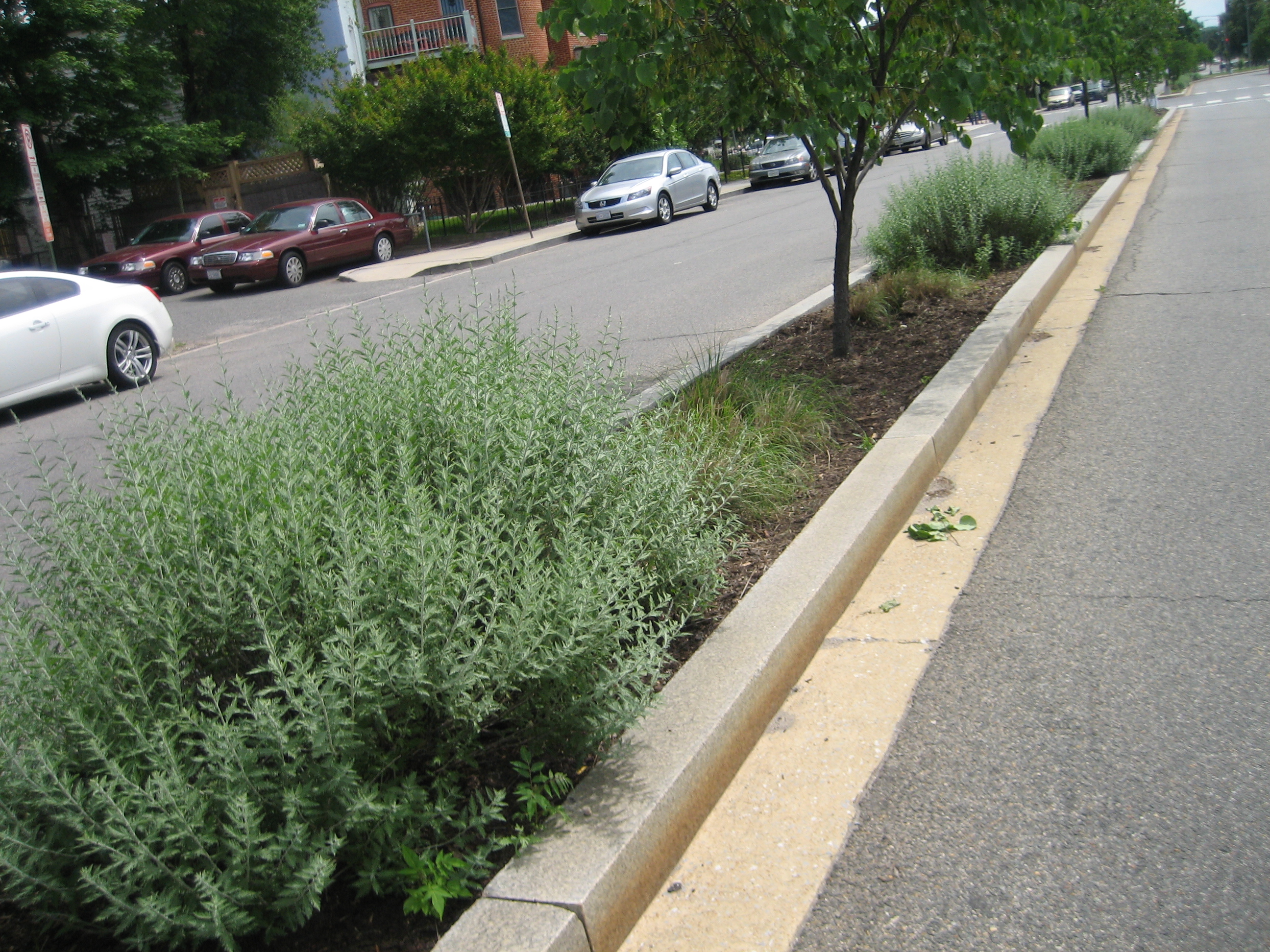
Being that I live near a city that is very concerned about its carbon footprint, (so much so streets get shut down to cars and beach bonfires are banned) I am rather surprised how little is done on their own part to improve the environment. There are literally square miles of parks, parking strips and medians that lie fallow or are planted with ornamental plants. My hat is off to the many hundreds of intrepid gardeners that convert parking strips and roundabouts for gardens and plant diversity.
If cities really wanted to make changes to become greener, the low hanging fruit that doesn't impose laws on what people can or can't do is to utilize city land for plant diversity, carbon sequestration and food production.

The average American meal travels over 1500 miles to reach their plate. The transportation costs are offset by doing agriculture on such a large scale it produces food cheaply.........as long as oil and natural gas prices stay low. What happens at $150 a barrel oil? Food becomes more expensive as it costs more to fertilize and transport.
I understand it is not feasible for a city to produce all of its own food but, what is the logic behind planting municipal land with ornamental and typically with little diversity. Just phasing in some hardy fruit and nut trees and shrubs would provide some food for those who want it at no extra cost to taxpayers. There is also more of a sense of ownership for people. If you have a fruit tree in front of your house that you eat from you will be more likely to look after it than a tree that you don't get anything from.
This could work to augment efforts to help the homeless the hungry and city supported food banks. Schools could put in a few trees to show that food doesn't come from a store but a farm or garden. Eating publicly grown produce is not for everyone of course but just that it is there millions of calories will get eaten by somebody and that is one less trip food has to make.

Many cities are already doing this, there has been a groundswell of interest in urban gardening, pea patches and converting your front yard into a food source. The emphasis now should be to stay on city governments to make sure they are good stewards of the earth and our tax dollars at the same time.
Wednesday, February 9, 2011
Beehive home tour.
This is great overview of different hive designs as well as options for urban beekeeping. I have plans for a top bar hive here.
Sunday, February 6, 2011
Gardening for pollinators: Win-Win-Win
If you already have a kitchen garden, you diversify your crops and attract more pollinators. You may already have some of these plants in your garden, but may want to encourage and expand plantings. Bringing in more pollinators will help boost your production in the rest of your garden.
Some others to consider: Dill, fennel, carrot, mustard, artichoke, strawberry, lavender, apple, oregano, rosemary, raspberry, and blackberry.
The full list can be found here.
 |
| Squash, gourds and pumpkins. These productive plants already give more than enough surplus that neighbors and co-workers start hiding from you when they are in season. There are limits to how much summer squash one can deal with. My best advice is pick early and pick often, even the squash blossoms which are edible. Hard shell squash keep very well, for months even, so a large harvest may not be so difficult to deal with. |
 |
| Sunflowers are large color spots. Even if you don't want to deal with harvesting the seeds you can save them as birdseed during the summer. Make sure they are planted with their size in mind, they grow quite tall. |
 |
| Mint. Be careful with this one, mint has a way of taking over and just a few pieces of root can quickly spread over the garden if you till under each year. Mint can be dried, makes a refreshing tea and an attractive garnish. Mint can also deter some pests in the garden the oils act as a repellent. |
 |
| Blueberries, cranberries and huckleberries. This is a good one all around, as long as you give it the acidic soil that they need. There are many varieties to choose from and they all freeze well and without processing. |
The full list can be found here.
Friday, February 4, 2011
Planting flowers to help Bees and Pollinators
The sheer magnitude of what is afflicting bees and other beneficial insects should give us all pause to think "what can I do". Even if all you have is a flower box outside of your window you can still keep our pollinators in mind and help boost the yield of herbs, fruits and vegetables that you may also grow.
A long list of plants is available on the USDA website and can be found here.
I will list some native and common plants that you may already have growing on your property; if so you can encourage them to thrive.
A long list of plants is available on the USDA website and can be found here.
I will list some native and common plants that you may already have growing on your property; if so you can encourage them to thrive.
 | |||
|
 | |
| Sedum or Stonecrop as its name implies thrives in rocky areas and fairly drought tolerant. |
 |
| Mexican Sunflower as you can see is great for pollinators, heat and drought resistant it makes for a wonderful color spot in ones yard. |
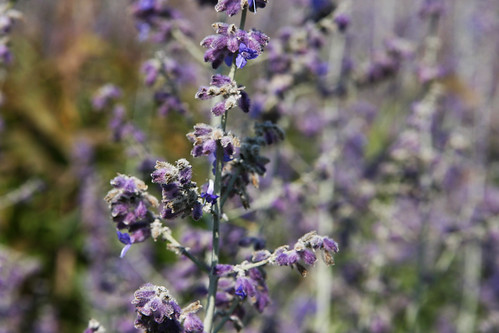 |
| Russian Sage, Filigran another nice color spot that grows large enough suitable for a background plant in a bed. |
 |
| Batchelor's button or cornflower, can be a weed but with that said you may not want to discourage it as much as other weeds as it does offer nice color. |
 |
| Black eyed susan. Another native wildflower that can be encouraged. |
 |
| Bluebells scorpion weed, grows in many soil types. Some people may be allergic (rash) to it. |
Friday, September 10, 2010
More Beehives from around the world
 | |
| Sidr honey beehives. This rare honey goes for $200 a Kg or about $100 a lb. |
 |
| A London roof top, notice the camera to watch the bees. |
 |
| Collecting heather honey. |
 |
| Holland circa 1900. |
Thursday, July 29, 2010
Beehives of the world
 |
| Beehives in China near where the earthquake struck. Hollow logs covered with slate to keep them from the elements. |
 |
| This is the modern type of bee hive used in Cameroon called a Kenyan Top Bar. The other kind is like an artificial hollow log made from bamboo-- kind of like Winnie the Pooh. And all of the bees here are African Killer Bee |
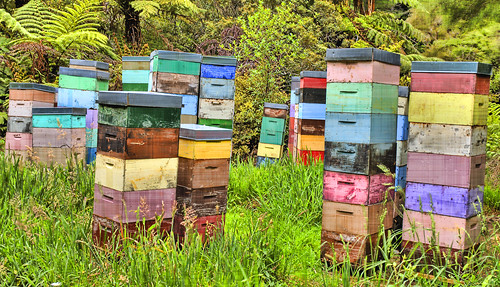 | ||
| Beehives from the north island of New Zealand. |
 | |
| Museum of Folk Architecture and Rural Life. Pyrohiv, Nr Kyiv. Over time historical buildings have been brought here from all over Ukraine to live the communal life of an open-air museum. The space is split into the regions of Ukraine so that the buildings are grouped by geographic origin. The beehives where used as such in the past, disused now. They have been brought from Volyn' a province in Western Ukraine. They are made from the trunks of trees and each one is slightly different; different trees lend themselves to different effects. Some of them are decorated, carved or have thatched rooves. Each trunk would have a section cut out which is used to hollow out the trunk and then the outer piece is refitted as a sort of 'door' into the inside. |
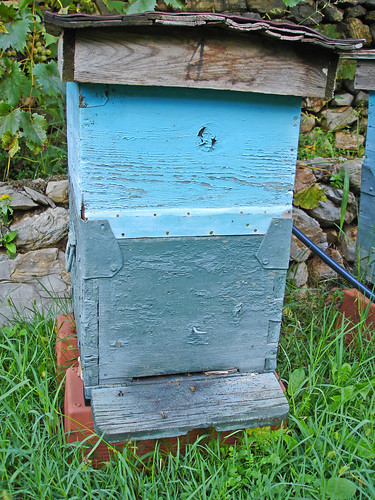 |
| Beehive. |
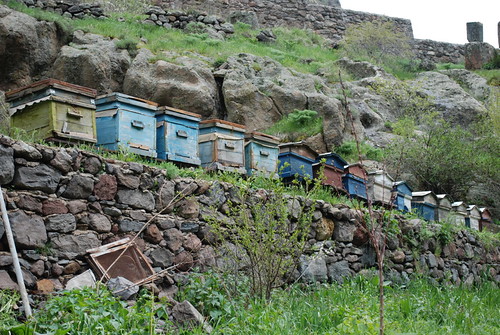 |
Beehives - Geghard Monastery - Armenia |
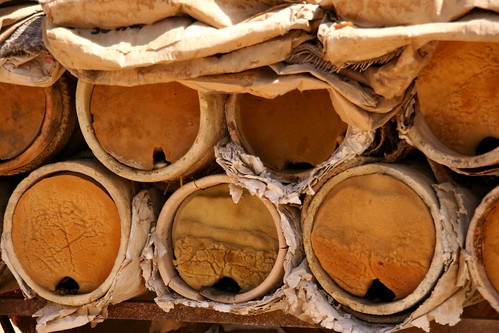 |
| Yemen |
 |
| Siberia. A nice cushion to keep them warm. |
 |
| Mobile beehives in Slovenia. |
 |
| More individually painted hives from Slovenia. Your Beeswax: More Beehives from around the world |

Thursday, May 20, 2010
Urban beekeeping
I have spoken to several urban beekeepers while doing the farmers markets all have interesting stories especially the ones from New York. Apparently each of the five boroughs have distinct flavors of honey. From what I hear beekeeping in NYC is no longer a clandestine operation and can be done legally now.
http://www.nytimes.com/2010/03/15/science/earth/15bees.html
Bees in the City? New York May Let the Hives Come Out of Hiding
Michelle V. Agins/The New York Times
Kathleen Boyer suspects the mailman.
She said she could not think of anyone else in her neighborhood who would have complained about the two beehives she kept under a pine tree in her front yard in Flatbush, Brooklyn, leading the city’s health department to fine her $2,000 last fall.
“I was kind of surprised,” said Mrs. Boyer, an art director with a media company. “People see us in our bee suit and they’d bring their kids to watch us and ask us questions.”
New York City is among the few jurisdictions in the country that deem beekeeping illegal, lumping the honeybee together with hyenas, tarantulas, cobras, dingoes and other animals considered too dangerous or venomous for city life. But the honeybee’s bad rap — and the days of urban beekeepers being outlaws — may soon be over.
On Tuesday, the Department of Health and Mental Hygiene’s board will take up the issue of amending the health code to allow residents to keep hives of Apis mellifera, the common, nonaggressive honeybee. Health department officials said the change was being considered after research showed that the reports of bee stings in the city were minimal and that honeybees did not pose a public health threat.
The officials were also prodded by beekeepers who, in a petition and at a public hearing last month, argued that their hives promoted sustainable agriculture in the city.
A ban, of course, has not deterred many New Yorkers from setting up hives on rooftops and in yards and community gardens, doing it as a hobby, to pollinate their plants or to earn extra income from honey. Although the exact number of beekeepers in the city is unknown, many openly flout the law. They have their own association, hold beekeeping workshops, sell their honey at farmers’ markets and tend to their hives as unapologetically as others might jaywalk, blaming their legal predicament on people’s ignorance of bees.
“People fear that if there’s a beehive on their rooftop, they’ll be stung,” said Andrew Coté, president of the New York City Beekeepers Association, which was formed two years ago and has 220 members.
“Honeybees are interested in water, pollen and nectar,” he said. “The real danger is the skewed public perception of the danger of honeybees.”
Still, some beekeepers say their renegade status causes headaches.
Sam Elchert, 22, a Columbia University student who is majoring in writing and philosophy, said it took him months to find a suitable home for his hives, which resemble short wood filing cabinets with movable frames inside. His building’s management turned him down, fearing legal problems because of the hives, he said. A community garden in Brooklyn welcomed the hives, but wanted them tucked away in the bushes where they would not get the sunlight they needed.
A friend of Mr. Elchert’s, who owned a brownstone in Manhattan complete with a backyard, declined to house the hives because his father was a lawyer, Mr. Elchert said. So did Columbia, where officials in charge of dining services and some green roofs said no, though they were supportive.
A teacher hosted the bees on her farm in Connecticut for a couple of months while Mr. Elchert kept up his search for a home for his hives. Finally, in June, a community garden in Harlem agreed, and Mr. Elchert goes there every other week to tend to the hives. He said that an article he read last year about beekeeping introduced him to the hobby, which he finds “oddly relaxing,” he said. He said he had also read about declines in the bee population and wanted to do his part to nurture the insects.
“It is a good cause, and there’s some sense of morality, even if we’re not on the right side of the law,” he said.
But Mr. Elchert admits that so far he has found his hobby more “nerve-racking” than relaxing, and inspects the garden only on weekdays to avoid weekend crowds.
“What if somebody, some cop, sees me?” he said. “It’d cost me $2,000. It’d really ruin my day.”
Busted beekeepers, as it turns out, are not exactly common. In 2009, 53 inspections were conducted in response to calls related to the harboring of bees and wasps, health officials said, and 13 resulted in notices of violation and fines of $200 to $2,000. In 2008, 48 inspections were made and 7 citations were issued.
Beekeepers say that beekeeping is a relatively low-maintenance and inexpensive endeavor — Mr. Elchert said he spent $500 on hives, equipment and about 20,000 bees to start.
Recently, 70 people filled a room in Lower Manhattan for an “Urban Beekeeping 101” workshop held by the New York City Beekeepers Association.
The class seemed more concerned about the challenges of keeping hives in tight, tall spaces than with the legality of beekeeping, asking questions like: “How high should the hives be?” (About five stories.) And “How much space is needed around the hives so that the bees can fly out to pollinate?” (At least 10 feet.)
But some students were worried about their liability should someone be stung, a hazard that leads most beekeepers to wear protective gear when they tend their hives.
“I’m not even allowed on the roof of my building,” said Matt Griffin, 33, a cook from Queens who said he would probably wait for the law to change and figure out “a few issues” before setting up his hives.
Katrinka Moore, 56, a poet and book editor in the financial district, said that if the law changed, she would ask neighboring churches to host her bees.
That would mean an end to life on the run for Mrs. Boyer’s two hives. They are now lodged with a friend — Mrs. Boyer would not say where — but she plans to retrieve them once they are legal.
Mrs. Boyer said that she and her husband, Chico, took up beekeeping last year so that they could teach workshops in Haiti, where Mr. Boyer was born.
The earthquake has delayed the couple’s plans, but their hives are thriving with 80,000 bees that have yielded more than 100 pounds of honey.
“We gave it to friends for Christmas,” Mrs. Boyer said. “They love it. Everybody is asking for more.”
Ms. Moore said that after working in advocacy against gas drilling in upstate New York, she looked to beekeeping for some relief.
She said: “You get honey. You’re also pollinating gardens. It’s such a positive, happy thing to do.”
Brooklyn's Urban Beekeepers: Breaking The Law For The Planet (Part I) from SkeeterNYC on Vimeo.
Brooklyn's Urban Beekeepers: "Watch Out Ladies" Honey Harvest from SkeeterNYC on Vimeo.
http://www.nytimes.com/2010/03/15/science/earth/15bees.html
Bees in the City? New York May Let the Hives Come Out of Hiding
Michelle V. Agins/The New York Times
Kathleen Boyer suspects the mailman.
She said she could not think of anyone else in her neighborhood who would have complained about the two beehives she kept under a pine tree in her front yard in Flatbush, Brooklyn, leading the city’s health department to fine her $2,000 last fall.
“I was kind of surprised,” said Mrs. Boyer, an art director with a media company. “People see us in our bee suit and they’d bring their kids to watch us and ask us questions.”
New York City is among the few jurisdictions in the country that deem beekeeping illegal, lumping the honeybee together with hyenas, tarantulas, cobras, dingoes and other animals considered too dangerous or venomous for city life. But the honeybee’s bad rap — and the days of urban beekeepers being outlaws — may soon be over.
On Tuesday, the Department of Health and Mental Hygiene’s board will take up the issue of amending the health code to allow residents to keep hives of Apis mellifera, the common, nonaggressive honeybee. Health department officials said the change was being considered after research showed that the reports of bee stings in the city were minimal and that honeybees did not pose a public health threat.
The officials were also prodded by beekeepers who, in a petition and at a public hearing last month, argued that their hives promoted sustainable agriculture in the city.
A ban, of course, has not deterred many New Yorkers from setting up hives on rooftops and in yards and community gardens, doing it as a hobby, to pollinate their plants or to earn extra income from honey. Although the exact number of beekeepers in the city is unknown, many openly flout the law. They have their own association, hold beekeeping workshops, sell their honey at farmers’ markets and tend to their hives as unapologetically as others might jaywalk, blaming their legal predicament on people’s ignorance of bees.
“People fear that if there’s a beehive on their rooftop, they’ll be stung,” said Andrew Coté, president of the New York City Beekeepers Association, which was formed two years ago and has 220 members.
“Honeybees are interested in water, pollen and nectar,” he said. “The real danger is the skewed public perception of the danger of honeybees.”
Still, some beekeepers say their renegade status causes headaches.
Sam Elchert, 22, a Columbia University student who is majoring in writing and philosophy, said it took him months to find a suitable home for his hives, which resemble short wood filing cabinets with movable frames inside. His building’s management turned him down, fearing legal problems because of the hives, he said. A community garden in Brooklyn welcomed the hives, but wanted them tucked away in the bushes where they would not get the sunlight they needed.
A friend of Mr. Elchert’s, who owned a brownstone in Manhattan complete with a backyard, declined to house the hives because his father was a lawyer, Mr. Elchert said. So did Columbia, where officials in charge of dining services and some green roofs said no, though they were supportive.
A teacher hosted the bees on her farm in Connecticut for a couple of months while Mr. Elchert kept up his search for a home for his hives. Finally, in June, a community garden in Harlem agreed, and Mr. Elchert goes there every other week to tend to the hives. He said that an article he read last year about beekeeping introduced him to the hobby, which he finds “oddly relaxing,” he said. He said he had also read about declines in the bee population and wanted to do his part to nurture the insects.
“It is a good cause, and there’s some sense of morality, even if we’re not on the right side of the law,” he said.
But Mr. Elchert admits that so far he has found his hobby more “nerve-racking” than relaxing, and inspects the garden only on weekdays to avoid weekend crowds.
“What if somebody, some cop, sees me?” he said. “It’d cost me $2,000. It’d really ruin my day.”
Busted beekeepers, as it turns out, are not exactly common. In 2009, 53 inspections were conducted in response to calls related to the harboring of bees and wasps, health officials said, and 13 resulted in notices of violation and fines of $200 to $2,000. In 2008, 48 inspections were made and 7 citations were issued.
Beekeepers say that beekeeping is a relatively low-maintenance and inexpensive endeavor — Mr. Elchert said he spent $500 on hives, equipment and about 20,000 bees to start.
Recently, 70 people filled a room in Lower Manhattan for an “Urban Beekeeping 101” workshop held by the New York City Beekeepers Association.
The class seemed more concerned about the challenges of keeping hives in tight, tall spaces than with the legality of beekeeping, asking questions like: “How high should the hives be?” (About five stories.) And “How much space is needed around the hives so that the bees can fly out to pollinate?” (At least 10 feet.)
But some students were worried about their liability should someone be stung, a hazard that leads most beekeepers to wear protective gear when they tend their hives.
“I’m not even allowed on the roof of my building,” said Matt Griffin, 33, a cook from Queens who said he would probably wait for the law to change and figure out “a few issues” before setting up his hives.
Katrinka Moore, 56, a poet and book editor in the financial district, said that if the law changed, she would ask neighboring churches to host her bees.
That would mean an end to life on the run for Mrs. Boyer’s two hives. They are now lodged with a friend — Mrs. Boyer would not say where — but she plans to retrieve them once they are legal.
Mrs. Boyer said that she and her husband, Chico, took up beekeeping last year so that they could teach workshops in Haiti, where Mr. Boyer was born.
The earthquake has delayed the couple’s plans, but their hives are thriving with 80,000 bees that have yielded more than 100 pounds of honey.
“We gave it to friends for Christmas,” Mrs. Boyer said. “They love it. Everybody is asking for more.”
Ms. Moore said that after working in advocacy against gas drilling in upstate New York, she looked to beekeeping for some relief.
She said: “You get honey. You’re also pollinating gardens. It’s such a positive, happy thing to do.”
Brooklyn's Urban Beekeepers: Breaking The Law For The Planet (Part I) from SkeeterNYC on Vimeo.
Brooklyn's Urban Beekeepers: "Watch Out Ladies" Honey Harvest from SkeeterNYC on Vimeo.
Subscribe to:
Posts (Atom)