This was produced before America formally entered the war. This garden is huge for a family of 4 or 5 pictured. It was probably the idea to grow far more than needed to feed the neighboring community. Apparently all of the dust masks were being used for the war effort, so young Dick is inhaling all of those pesticides. No mention of compost; and the weeds that they mention; lambs quarter and amaranth are often being eaten now by foragers.
Remember, no garden, no victory. Being threatened with the loss of freedom by gaining food freedom seems such innocuous propaganda.
1

Showing posts with label agriculture. Show all posts
Showing posts with label agriculture. Show all posts
Monday, June 25, 2012
Thursday, May 17, 2012
Sunday, December 25, 2011

Saturday, December 24, 2011

Tuesday, December 20, 2011
The Problems of Society are Problems within the Human Mind.
Nick Titar speaks on permaculture and changing the way we think.


Sunday, December 18, 2011
Suburban Homestead

Compared with what some urban homesteaders are able to get away with this seem like more than enough land. Mind you, the chart looks more like mimicking conventional agriculture and crops than what could be optimized in ones own climate zone. An aquaponic operation would cut down on the square footage dramatically and increase the protein production as well. Rabbits en lieu of chickens for protein and adding bees for honey and pollination would cut inputs (feed) and boost production with the bonus of extra calories from honey.
Thursday, November 10, 2011
GMO Factsheet
 |
| Fullsize |
Friday, July 15, 2011

Friday, April 29, 2011
Thank our ancestors we are not starving.

Right now it is easy to see how dependent we are on modern technology to keep the world fed. Larger, productive farms replacing subsistence farming around the world. These practices for better or for worse keep mouths fed and bellies full.
But step back for a moment, just as the world couldn't have succeeded in growing the population to such enormous levels without improvements in farming methods, we wouldn't be here if it were not for our ancestors.
Many crops were domesticate through thousands of years of selective breeding and only exist today due to human intervention. Take the brassica family:
About 2000 years ago Brassica oleracea was first domesticated and grown in Mediterranean gardens. Growers kept seeds of the larger leafed plants and eventurally it became to what we know as kale today. Following the developement of kale growers selected ever and ever more tight bunches of leaves at the top of the plant that in turn led to the formation of heads of cabbage over successive generations of selection.
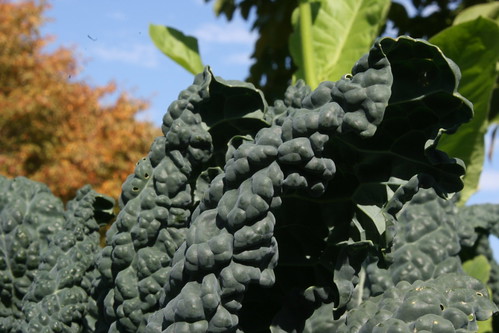

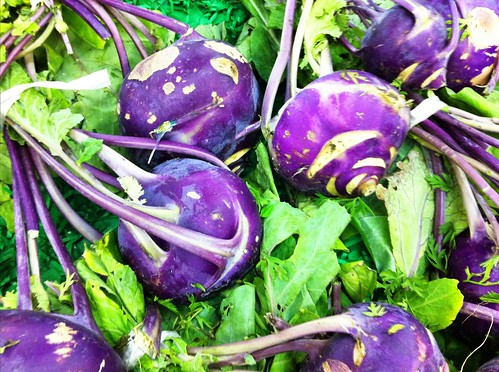
About the same time cabbage came into existance successive growing of large rooted kale plants led to kohlrabi.
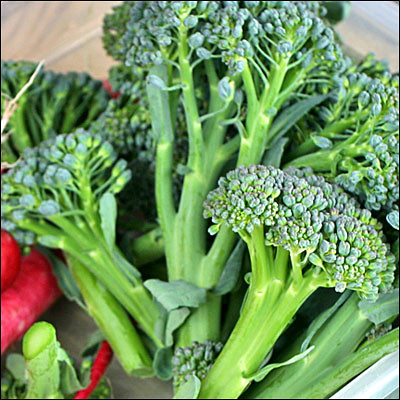
Later with a penchant for eating the flowering buds of the plant growers later developed cauliflower and broccoli.

Still later after that in Belgium the selection smaller buds on cabbage led to the cultivation of brussel sprouts.
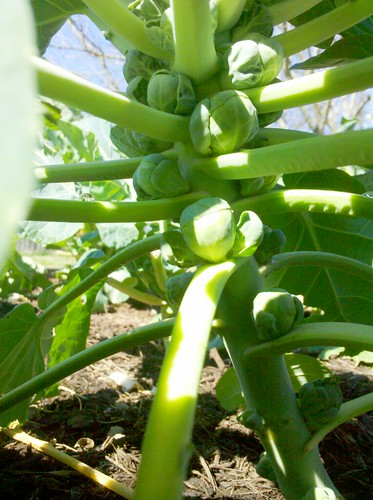
So between 2000 years ago and 300 years ago 6 distinct vegetables were painstakingly developed by our ancestors. This is but one plant that developed into several food crops, 2000 years in the making. The full girth of this worlds population weighed heavily on the shoulders of our ancestors, without them we would probably not have variety cultivars to grow in many parts of the world and we would not have the variety to as easily make a balanced diet.
Saturday, February 26, 2011
Improving honeybee populations?
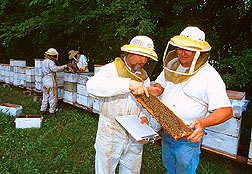
I came accross this article and still haven't been able to find the USDA survey release associated with it.
The number of honey-producing bee
colonies in the U.S. rose 7.4 percent last year
and honey production was up 20 percent,
the Department of Agriculture said.
About 2.684 million colonies were reported
by beekeepers with five or more hives in
2010, the USDA said Friday in a report.
Honey production rose to 65.5 pounds per
colony, up 12 percent from 2009, with
overall output at 176 million pounds. The
average price at the private and retail levels
was $1.603 a pound, an all-time high and up
8.8 percent from the previous record last
year, the USDA said.
If this is the full story this is very good news. I would like to find the full survey to see if it mentions the size of colonies. Beekeepers could be maintaining more hives that are smaller colonies by splitting colonies into two hives as population rises in the summer. Also honey prices have dramatically increased in the last few years, so it is possible that more beekeepers are focusing more on honey production than just making their money on pollination. Bee colonies were still being flown in from Australia last year for pollination, which tells me along with continued high pollination rates that farmers are still struggling to get bees for pollination.
Hopefully we are turning the corner or at least things are getting less worse. But with many surveys like this the devil is in the details. While colonies may be improving and honey production is ramping up, pollination could still be in peril. I would like to get the full story.
Friday, February 25, 2011
Agriculture measured in barrels not bushels.

With the recent run up in oil it is particularly timely to look at the impact of higher oil prices on agriculture. Long term our current structure of industrial large scale agriculture is not sustainable to keep prices low on commodity crops. Since WWII production has been increasing per acre quite dramatically. Pesticides, cheap synthetic fertilizers and a low cost transportation system boosted yields at the same time crop prices moderated even as populations globally soared.
As you can see the large gains in agricultural yields has been on the back of an expanding oil supply and better technology. While I am not in the camp that we are running out of oil, we are running out of "cheap" oil namely light sweet crude which is easier and cheaper to refine than heavier varieties. Also many of the land based oil fields are maturing making oil more costly to extract in new areas such as off shore.(ratio of corn out/energy in): Ratio in 1945 = 3.5Between 1910 and 1983, corn yields in the US increased by 346% (on a per area basis), which the energy inputs increased by 810%, also on a per area basis!
Ratio in 1983 = 2.5
That is, we are putting more and more fossil fuel energy into production for a given level of output! Viewed slightly differently, we're not getting as much more corn out as we are putting extra energy in; the efficiency ratio is worsening over time!
Wikipedia:
Switching to natural gas could help blunt the impact of an oil price spike. New natural gas fields are being found and new technology has greatly increased recovery rates. Natural gas is cleaner than oil but we are still looking at supply constraints to keep up with the current trajectory of food production needed for population growth. Natural gas is used extensively in ammonia fertilizer production.Ammonia production depends on plentiful supplies of natural gas, a finite resource, to provide the hydrogen. Due to ammonia's critical role in intensive agriculture and other processes, sustainable production is desirable. This is possible by using renewable energy to generate hydrogen by electrolysis of water. This would be straightforward in a hydrogen economy by diverting some hydrogen production from fuel to feedstock use. For example, in 2002, Iceland produced 2,000 tons of hydrogen gas by electrolysis, using excess electricity production from its hydroelectric plants, primarily for the production of ammonia for fertilizer.[3] The Vemork hydroelectric plant in Norway used its surplus electricity output to generate renewable ammonia from 1911 to 1971.[4] In practice, natural gas will remain the major source of hydrogen for ammonia production as long as it is cheapest.As you can see keeping ammonia inexpensive and plentiful will be difficult. If we look to electrolysis for hydrogen production we need to produce more clean electricity. Cost of new energy for electricity will become more expensive as fossil fuel prices continue to rise. My feeling is that until alternative energy picks up the slack for higher oil prices, natural gas will step in as an acceptable alternative. Increased natural gas demand will keep fertilizer prices increasing.
What are the alternatives. Swing the pendulum back towards more small farms, less monoculture and more local production. It may cost more to grow a tomato in the north than in Mexico but the increasing price of transportation will keep smaller local farms economically viable. Much more study must be done to improve a poly-culture approach to agriculture. What crops grow best together? What can be used on the farm to provide its own fertilizer?
I am very optimistic on agriculture and farming in the long term. It will be a struggle to deal with higher fossil fuel cost but eventually we will be more sustainable and less dependent on fossil fuels.
Sunday, February 20, 2011
Commercial Pollination going forward.


As agriculture became more specialized and more reliant on economies of scale to production costs low, bees were moved around the country to pollinate one crop after another as they bloomed. This is done on a large scale with bees only having one type of blossom to forage for weeks at a time. Until the last hundred years bees were never used like this, transported on semi-trucks to one field or orchard after another. It boosts crop yields but bees never evolved to be dependent upon a monoculture, they aren't designed for the industrial agricultural paradigm.
We shouldn't be surprised of the large bee losses lately inclusively known as CCD or colony collapse disorder. Beekeepers that don't follow the blooming of crops around the country aren't having the same problems. Comparatively the losses of small natural and organic beekeepers are minimal. As an analogy imagine that you are a traveling salesman going to a new city each month but the catch is that you can only eat one type of food breakfast, lunch and dinner. Bacon one month, pepperoni pizza the next, plain rice the next and dry salads the next. After a season like this you would probably be malnourished, even though if you mixed it all you would be fine. Same things with the bees monoculture and traveling are making their immune systems diminished and more susceptible to disease.
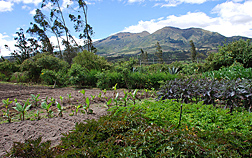
Some alternatives are:
Set aside an easement on a farm for native and commercial pollinators to forage. This allows more diversity in pollinators for better pollination. Some pollinators do better in cool or wet weather than honeybees allow even better crop yield. More forage for bees will allow pollinators to be kept in the same area year round.
Vary the crops being grown, much like crop rotation diversity of crops will cut down on one single pest that thrives in an environment of their favorite plant to vex. Bees can fly up to 3 miles to forage so large farms can grow several tracts of crops giving some diversity to pollinators.
Research. More research needs to be done in finding better farming techniques that look at farming as a series of systems that all work together to be more self-sufficient. Growing crops to help fertilize others, growing crops to help pollinate others and growing crops to help conserve water in the field.
The problem with this type of research can be summed up in one phrase "follow the money". There will never be the economic incentive to do in-depth research into dynamic farming as producing the next block buster billion dollar GMO crop or pesticide. The financial incentive is just not their in research and more and more funding at the university level is coming from the big chemical and modified crop companies. Companies help fund research that they can use while other funding gets cut due to budget constraints.
Eventually a few enterprising individuals will show success and profit with a fully integrated permaculture method of farming. This will be about the same time oil becomes so expensive that conventional agriculture will be looking to alternatives to petroleum based fertilizers and long distances transport.
Friday, February 18, 2011
Wednesday, February 16, 2011
Green Cities: time to walk the talk.
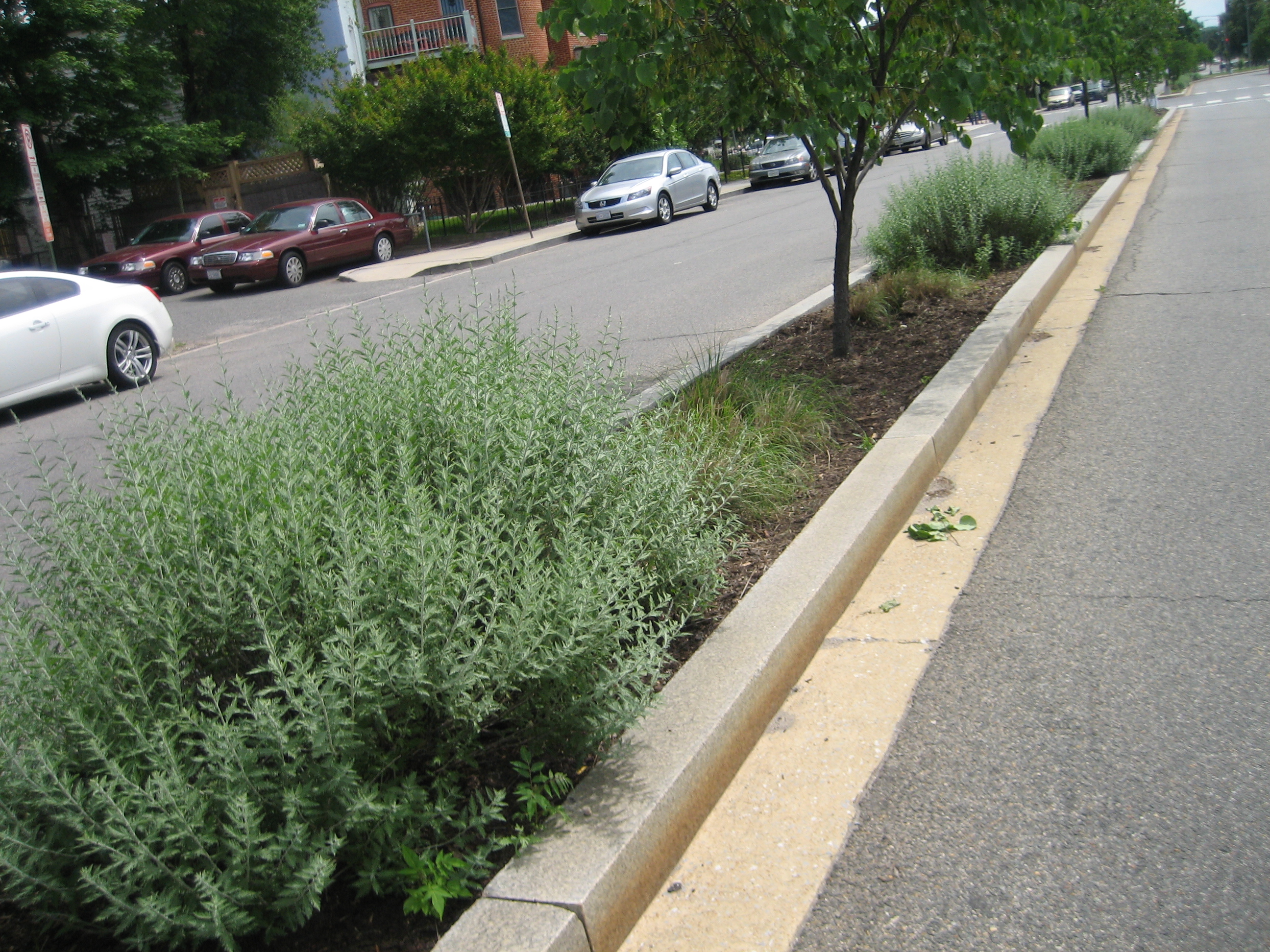
Being that I live near a city that is very concerned about its carbon footprint, (so much so streets get shut down to cars and beach bonfires are banned) I am rather surprised how little is done on their own part to improve the environment. There are literally square miles of parks, parking strips and medians that lie fallow or are planted with ornamental plants. My hat is off to the many hundreds of intrepid gardeners that convert parking strips and roundabouts for gardens and plant diversity.
If cities really wanted to make changes to become greener, the low hanging fruit that doesn't impose laws on what people can or can't do is to utilize city land for plant diversity, carbon sequestration and food production.

The average American meal travels over 1500 miles to reach their plate. The transportation costs are offset by doing agriculture on such a large scale it produces food cheaply.........as long as oil and natural gas prices stay low. What happens at $150 a barrel oil? Food becomes more expensive as it costs more to fertilize and transport.
I understand it is not feasible for a city to produce all of its own food but, what is the logic behind planting municipal land with ornamental and typically with little diversity. Just phasing in some hardy fruit and nut trees and shrubs would provide some food for those who want it at no extra cost to taxpayers. There is also more of a sense of ownership for people. If you have a fruit tree in front of your house that you eat from you will be more likely to look after it than a tree that you don't get anything from.
This could work to augment efforts to help the homeless the hungry and city supported food banks. Schools could put in a few trees to show that food doesn't come from a store but a farm or garden. Eating publicly grown produce is not for everyone of course but just that it is there millions of calories will get eaten by somebody and that is one less trip food has to make.

Many cities are already doing this, there has been a groundswell of interest in urban gardening, pea patches and converting your front yard into a food source. The emphasis now should be to stay on city governments to make sure they are good stewards of the earth and our tax dollars at the same time.
Friday, February 11, 2011
Gardening in small spaces with high yield. Intensive gardens not intensive labor
Intensive gardening has been around for centuries. Maximizing your food production has always been a goal of farmers and home gardeners. Taking a holistic approach to your planting can give better yield and lower labor. Let the plants do the work for you when possible.

1 Plant to build the soil. Plant non-edible plants that build the soil in the off season to till in in the spring time to build the soil. Or you can intersperse nitrogen fixing flowers in your garden for added color. Most importantly you are building the soil and stealing space from the weeds.

2 Plant to minimize watering. Know your plants. Some plants that like partial shade will do well under your tomato trellis. This will both shade the soil which keeps down the evaporation, and this will compete with weeds. Plant vegetables with deep taproots like carrots to help pull up the moisture from deep and use shallow rooted crop for shade.

3 Plant to maximize pollination. Flowers and vegetables can be added to the garden to attract pollinators and your other plants will get the benefit. You can find some garden vegetables to plant for pollinators here and flowers to plant here

4 Plant to prevent pest and disease. There are many companion plants out there that help prevent pests. Garlic for example helps repel slugs and aphids. So instead of planting a nice row of garlic, plant throughout the garden as long as the other plants get along with garlic.

5 Plant to maximize calories. If you are growing a garden to feed yourself and reduce your grocery bill, look to calorie rich produce like potatoes, sweet potatoes and leeks.
There are so many combinations of plants, coming up with what works in your garden and climate can be a daunting task. You can find a good basic list of companion plants here on wikipedia.
Intensive gardening nirvana is when you design a garden that requires minimal work, the plants help water themselves, fertilize themselves, pollinate and prevent pests in the garden.

1 Plant to build the soil. Plant non-edible plants that build the soil in the off season to till in in the spring time to build the soil. Or you can intersperse nitrogen fixing flowers in your garden for added color. Most importantly you are building the soil and stealing space from the weeds.

2 Plant to minimize watering. Know your plants. Some plants that like partial shade will do well under your tomato trellis. This will both shade the soil which keeps down the evaporation, and this will compete with weeds. Plant vegetables with deep taproots like carrots to help pull up the moisture from deep and use shallow rooted crop for shade.

3 Plant to maximize pollination. Flowers and vegetables can be added to the garden to attract pollinators and your other plants will get the benefit. You can find some garden vegetables to plant for pollinators here and flowers to plant here

4 Plant to prevent pest and disease. There are many companion plants out there that help prevent pests. Garlic for example helps repel slugs and aphids. So instead of planting a nice row of garlic, plant throughout the garden as long as the other plants get along with garlic.
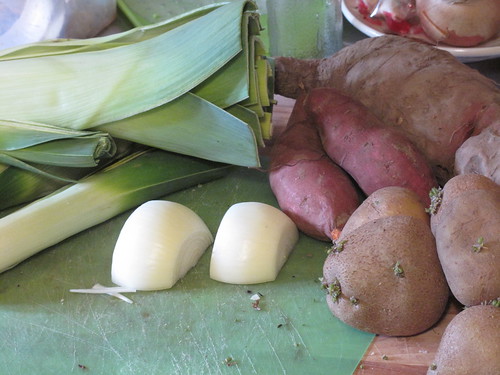
5 Plant to maximize calories. If you are growing a garden to feed yourself and reduce your grocery bill, look to calorie rich produce like potatoes, sweet potatoes and leeks.
There are so many combinations of plants, coming up with what works in your garden and climate can be a daunting task. You can find a good basic list of companion plants here on wikipedia.
Intensive gardening nirvana is when you design a garden that requires minimal work, the plants help water themselves, fertilize themselves, pollinate and prevent pests in the garden.
Wednesday, February 9, 2011
Floating gardens of the Aztecs.
Centuries ago the Aztec created a intricate system of canals and waterways to farm enough to feed a population of about 1 million. No modern technology just adapting and utilizing the environment to meet their needs.
A more scholarly description can be found here.
How the Aztec Empire fed the burgeoning population of its capital, Tenochtitlan, has long intrigued researchers. Most of Tenochtitlan’s estimated 150,000 to 200,000 inhabitants at the time of Spanish contact were not food producers. The system, known as chinampas, of draining swamps and building up fields in the shallow Basin of Mexico lakebeds, was a remarkable form of intensive agriculture that Jeffrey Parsons of the University of Michigan suggests provided one-half to two-thirds of the food consumed in Tenochtitlan.
It is quite impressive that so many people were fed without being subsistence farmers.
Keeping a historical perspective on agriculture can often teach more than just scientific research into better plant varieties and fertilizers.
Tuesday, February 8, 2011
Save on produce: Root Cellaring
To add to ideas to save money on fresh produce found here, you can take a page from the pioneers playbook and install a root cellar. This is not for everyone or even possible with where you live. If you are able to use a portion of your property to build one or even utilize part of your basement, you can take your gardens bounty and enjoy it through out the winter. Root crops like carrots, beets and potatoes are fairly easy to grow and keep well as do many of your gourds and squash. If you are unable to build a root cellar but have room for a garden, don't fret, many varieties of beets, carrots etc. do fine over winter just keeping them in the ground. Winter keeper varieties give you fresh produce in parts of the garden that aren't being uses during that season.
A basic walk through of building a root cellar can be found in Mother Earth News.
The wine cellar idea give a great dual purpose to the root cellar. As a brewer/vinter/meadmaker I like the idea of a place to ferment that will keep a fairly constant temperature as well as a place to keep produce.
Here are some useful links on root cellaring:
Build a Basement Root Cellar
Home grown fruit and vegetable storage.
The return of root cellars.
Using a root cellar for restaurant storage and eating local all year long.
Small scale root cellaring with food grade barrels. This is a simple easy solution for surplus crops.
A basic walk through of building a root cellar can be found in Mother Earth News.
The wine cellar idea give a great dual purpose to the root cellar. As a brewer/vinter/meadmaker I like the idea of a place to ferment that will keep a fairly constant temperature as well as a place to keep produce.
Here are some useful links on root cellaring:
Build a Basement Root Cellar
Home grown fruit and vegetable storage.
The return of root cellars.
Using a root cellar for restaurant storage and eating local all year long.
Small scale root cellaring with food grade barrels. This is a simple easy solution for surplus crops.
Monday, February 7, 2011
Agro-forestry + Aquaculture = Permaculture
"Sepp and Veronica Holzer, Austrian mountainside permaculturalists from before the term was invented, at their farm the Kramaterhof, became well known only after publicity in 2000. Sepp Holzer narrates the history of synergistic ideas that have made his farm a high production combination of agroforestry, aquaculture, terraces and raised beds, water heat exchange, self-produced electricity, pig raising, and fish farming without toxic pesticides, herbicides, or having to buy additional foods to feed the pigs and fish. The Kramaterhof farm is more biodiverse than his surrounding "pine tree desert" landscape and it generates its own Mediterranean microclimate through ingenious techniques--despite being 1500 meters up in the Austrian Tyrol. The Tyrol, with some of the finest skiing in Europe, under Sepp's care can grow lemons and kiwis. The film and his discussion provide a treasure trove of abstract techniques you can use. Learn how to integrate these techniques based on his 40 years of experimental expansion across 45 acres. He has turned marginal, erosion-prone mountain lands with poor, acidic soils into a stable Eden on Earth with rich soils, high biodiversity, and high productivity. This is done without irrigation, without expensive pesticides and herbicides, and without any imported fish, cattle, or pig feed. Instead it utilizes well chosen ecological cycles to expand production naturally. Sustainability and high productivity are elegantly conjoined."
Another good video of Sepp Holzer and his methods of sustainable forestry, agriculture and aquaculture. The most impressive part is how carefully woven every system is and how well one keep the next in check as well as improving it. What I like about Sepp is that so much of his knowledge is based upon observation not having several PhD's in engineering and materials science. Just spending time watching how water drains, heat being held in and the directions of winds then manipulating the landscape to take advantage of the traits that you want.
Sunday, February 6, 2011
Growing your own salad, save money eat fresh.
This is easy and can be done almost anywhere. A little bit of sun and you can have salad all season. Mix it up a bit in the fall with kale and chard and you can have four season greens in many areas.
Community supported agriculture. Eat your local economy.
Community supported agriculture allows direct marketing for farmers but just as importantly you can talk to the person who is growing your food. If you have a taste for a wide variety of vegetables a CSA may be right for you. You can purchase a share at the beginning of the season and get fresh veggies all summer long.
If you want to find a CSA near you follow the link.
Subscribe to:
Posts (Atom)